Nif-T
Published on: December 20, 2025
3 min read
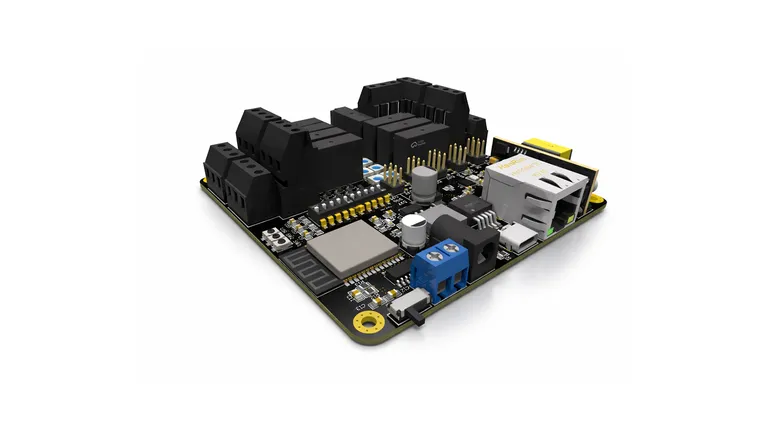
Nif-T - An all in one smart home automation board
A No-Nonsense Ethernet + PoE Smart-Home Controller
Renders
Visuals because everyone loves eye candy.
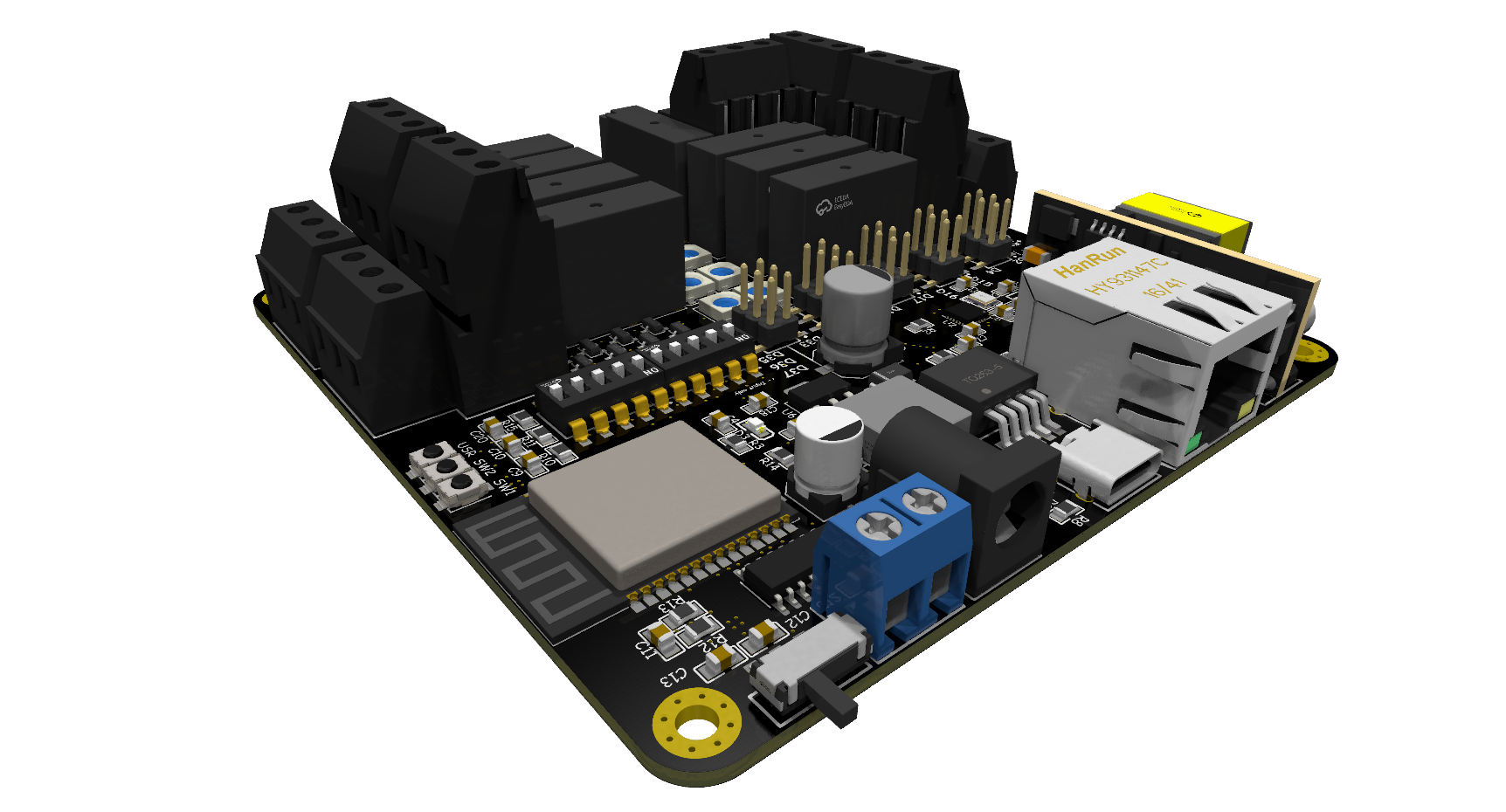
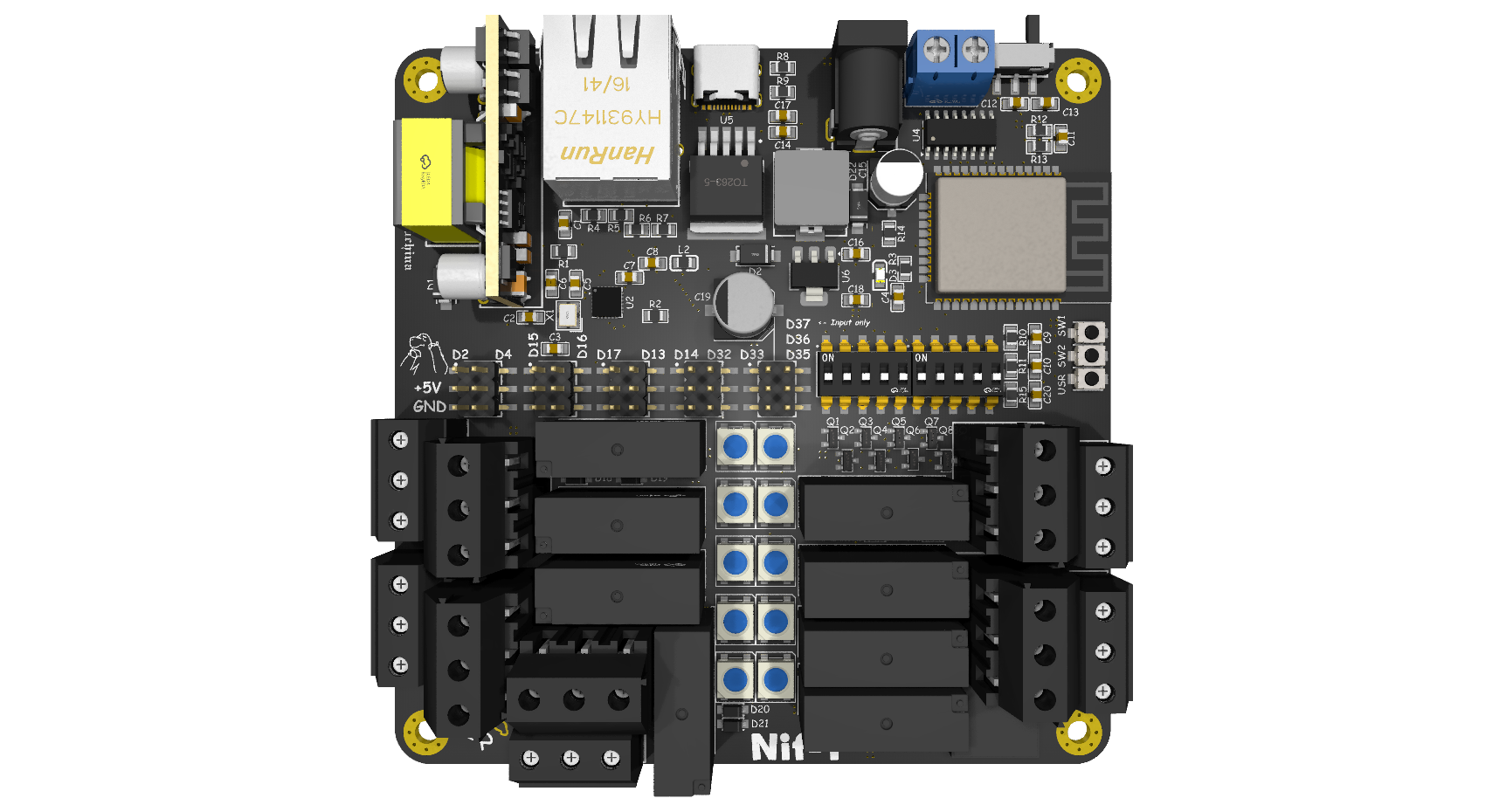
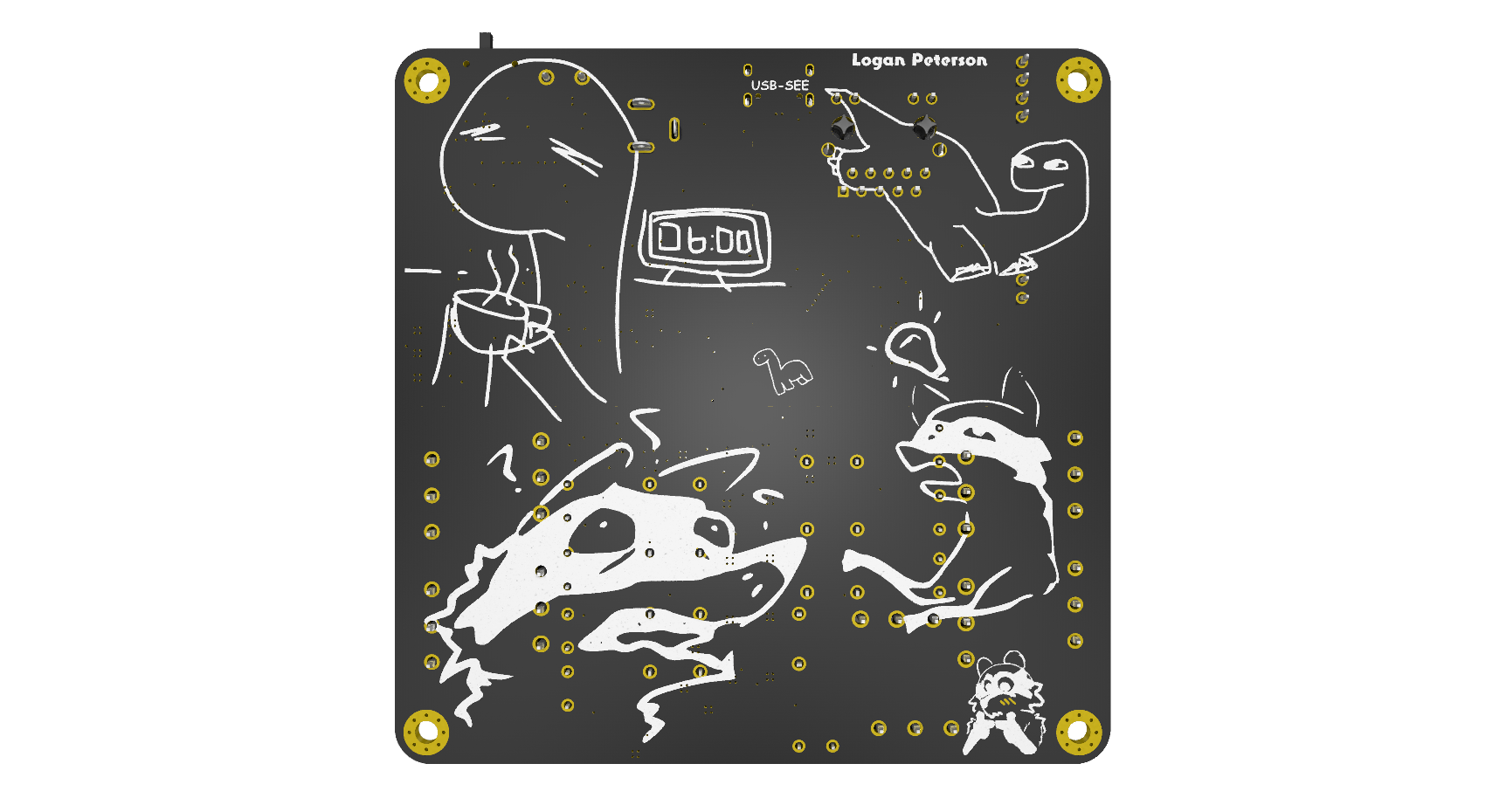
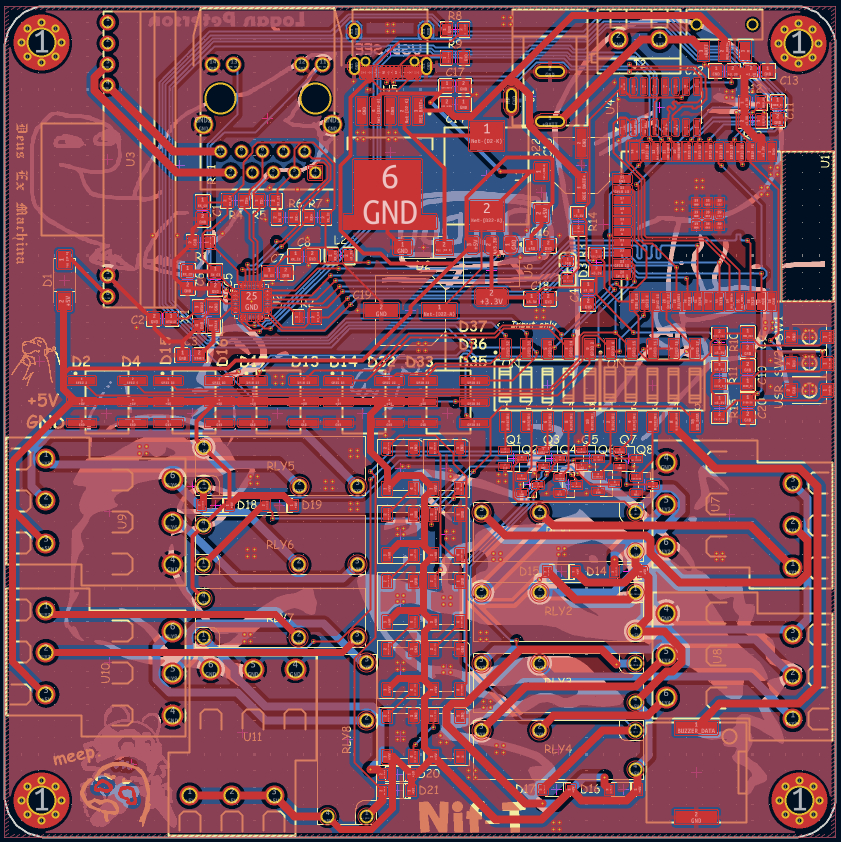
The middle ground planes are hidden in the PCB Routing render
BOM
All the silicon, magnetics, and clicky-relay goodness live here.
What is this?
Nif-T is a wired smart-home automation controller built around an ESP32-WROOM-32E, designed to be the thing that actually flips real switches when you ask your house to do something.
It’s meant for:
- Lights
- Outlets
- Relays
- Buzzers
- Addressable LEDs
- And other “turn this on when I say so” tasks
Unlike a lot of Wi-Fi-only smart devices, Nif-T speaks Ethernet — and it can be powered over the same cable using PoE. One cable in, automation out.
At a high level, Nif-T:
- Exposes physical relays and LEDs
- Talks to Home Assistant
- Which then talks to Google Home
- So you can say things like:
“Hey Google, turn on the big light.”
…and something actually happens.
Features
Relay Control
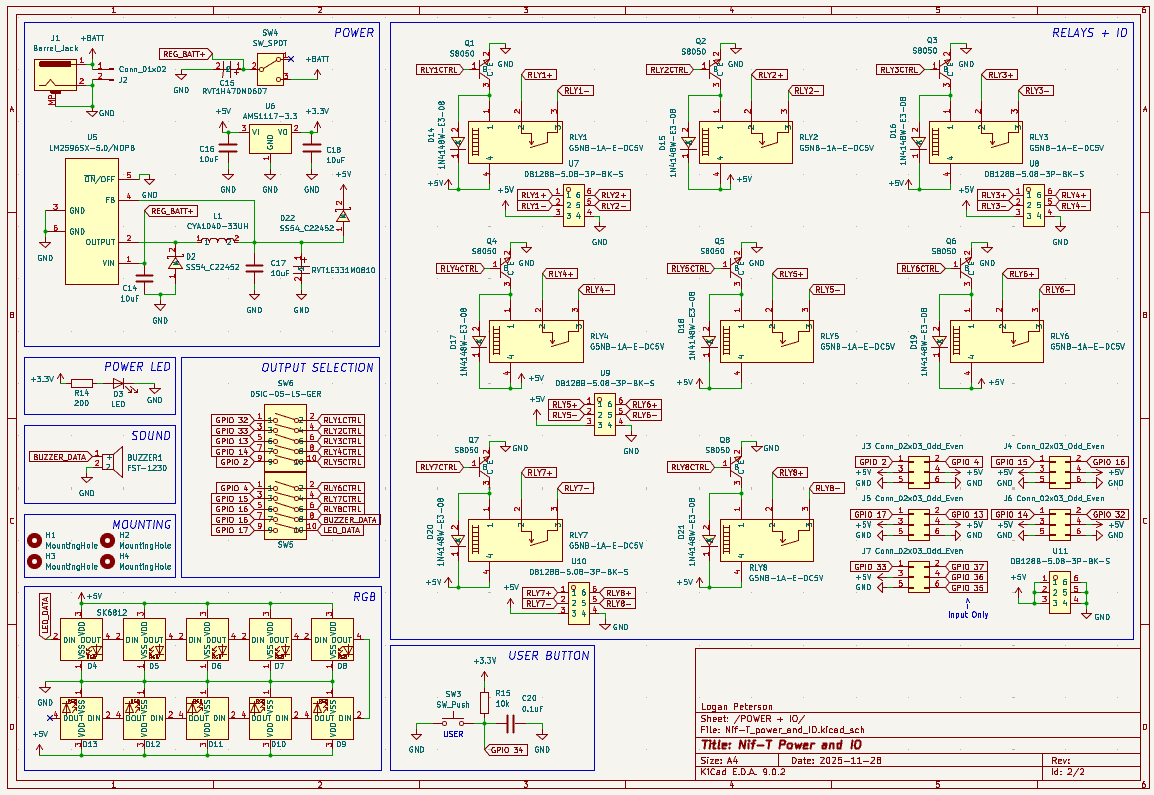
- 8× independent relay outputs
- Designed for:
- Lighting circuits
- Power control
- Low-voltage automation tasks
- Each relay is individually addressable via firmware
- Can be controlled via:
- MQTT
- Home Assistant
- Google Home (through HA)
(Please don’t hot-switch mains unless you know what you’re doing.)
Ethernet + PoE
Because reliability matters — and wall warts are annoying.
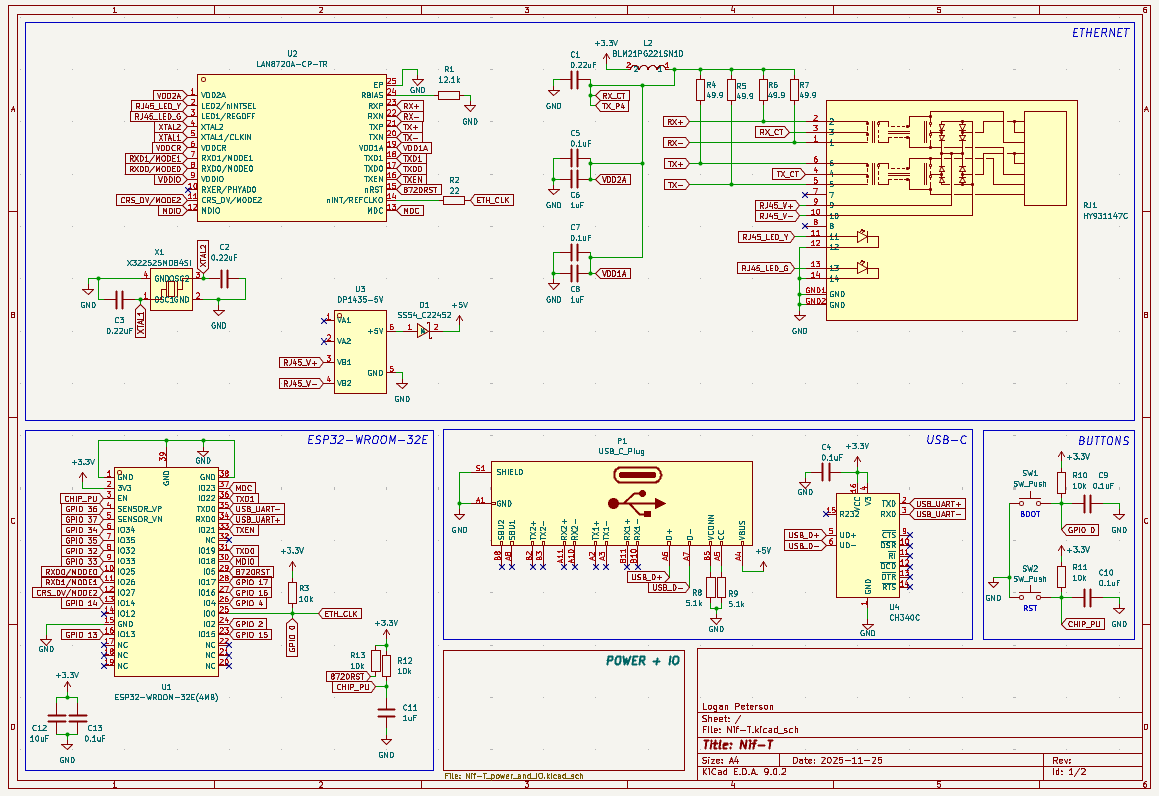
- LAN8720A Ethernet PHY
- RMII interface
- Dedicated 50 MHz oscillator on the PHY
- IEEE 802.3af Power over Ethernet
- Single-cable power + data
- On-board PD controller and isolation
- Clean DC rails generated locally
- No Wi-Fi congestion
- No random disconnects
- No external power brick required
Plug in Ethernet. That’s it.
RGB Status LEDs
Because silent boards are boring.
- 10× SK6812 Mini (GRBW) LEDs
- Can indicate:
- Network status
- MQTT / Home Assistant connection
- Relay activity
- Boot / error states
- Or just run rainbow animations for morale
- Fully firmware-controlled
Buttons & Feedback
- User button
- Can be mapped to:
- Toggle a relay
- Enter config mode
- Trigger a scene
- Can be mapped to:
- On-board buzzer
- Boot beeps
- Error alerts
- Confirmation chirps
- Mildly annoying sounds (optional but encouraged)
Connectivity & IO
- ESP32-WROOM-32E
- Dual-core MCU
- Plenty of GPIO for:
- Relays
- LEDs
- Buttons
- Buzzers
- USB-UART
- Firmware flashing
- Serial debugging
- Screw terminals
- For relays and power connections that shouldn’t wiggle loose
Pin Highlights (High-Level)
| Function | Notes |
|---|---|
| Relays | 8× GPIO-controlled outputs |
| LED Data | SK6812 GRBW strip (10 LEDs) |
| Ethernet RMII | LAN8720A w/ external 50 MHz oscillator |
| PoE Input | IEEE 802.3af compliant |
| User Button | Input-only GPIO (external pull-ups) |
| Buzzer | GPIO-driven piezo output |
(See schematic for full pin mapping and signal names.)
How It Works
At a high level:
- You plug in Ethernet (which also provides power via PoE)
- The PoE PD negotiates power and generates isolated DC rails
- The ESP32 boots and brings up Ethernet
- It connects to:
- An MQTT broker (usually Home Assistant)
- Home Assistant:
- Discovers Nif-T automatically
- Exposes relays and LEDs as entities
- Google Home talks to Home Assistant
- You talk to Google
- Nif-T clicks relays and blinks LEDs
Why?
Because:
- Wi-Fi smart plugs are flaky
- Ethernet is king
- PoE makes installs clean
- And sometimes you just want a solid, hackable, relay board that plays nicely with modern home automation
Nif-T exists to be:
- Boring in the best way
- Reliable
- Predictable
- And extremely easy to integrate into a real automation stack
Project State
The parts have been ordered and are currently being shipped.
Disclaimer
This project is open-source, built for fun, and tested only in theory.
If you:
- Wire mains incorrectly
- Ignore clearance rules
- Overload a relay
- Or let the magic smoke out
That’s on you.
Be careful, be smart, and enjoy having a house that actually listens.